The dental implant process usually has six stages: a 3D scan and plan, any preparation such as extractions or a bone graft, placing the implant, a healing period of about three to nine months while the bone fuses to it, attaching the abutment and final teeth, and long-term care. Implants for teeth replace the root, not just the visible tooth, which is why the process takes months rather than days.
The hardest part of the process is often the not knowing: how many appointments, how much it will hurt, how long you’ll live with a gap or a temporary tooth. Most people can handle a long process. What wears them down is a process nobody explained. This guide walks through each stage in order, with real healing times, so you know what’s coming before you sit in the chair.
How implants for teeth work
A natural tooth has two parts: the crown you see and the root inside the bone. A dental implant replaces both. A small post, most often titanium, is placed in the jawbone where the root used to be. Over the following months, the bone grows tightly around it, a process called osseointegration. Once that bond is solid, a connector called an abutment is attached, and the crown, bridge or denture goes on top.
According to the American Academy of Periodontology, the most common type is the endosteal implant, placed inside the bone. When there isn’t enough bone, other designs exist, such as subperiosteal implants that rest on the bone, or zygomatic implants anchored in the cheekbone.
Step 1: Evaluation and 3D CT scan
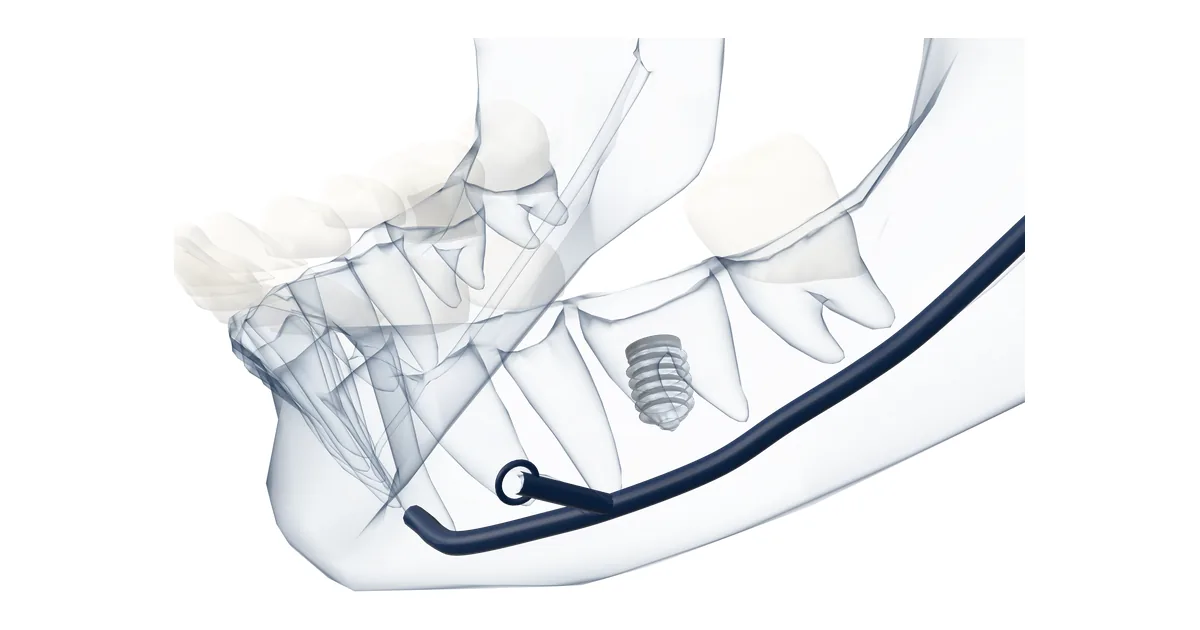
Everything starts with information. A regular X-ray shows teeth in two dimensions. A 3D CT scan (also called CBCT) shows the height, width and density of the bone, and where the nerves and sinuses are. That’s what decides:
- How many implants you need, and exactly where they go.
- Whether you have enough bone, or need a graft first.
- Whether regular implants are enough, or your case needs advanced options.
Bring your medical history and a list of medications. Some conditions and medicines change the plan, and an honest team will ask about them.
At Implantology, a 3D CT scan is $120, and if you already have one, you can send it to us before anything else.
Step 2: A written treatment plan
Before any surgery, you should have a plan in writing that says:
- What will be done, in which order, and over how many visits.
- The implant brand and the material of your final teeth.
- Whether you’ll have temporary teeth while you heal.
- What each step costs, item by item.
If you want to see how each of these lines is priced, read what each step costs.
Step 3: Preparation, if you need it
Not everyone needs this step. It can include:
- Extractions of damaged teeth. After a tooth is removed, the ridge of bone begins to shrink, and a systematic review found it can lose about a third of its width in the first three months (Tan et al., 2012).
- A bone graft or sinus lift, when there isn’t enough bone for an implant. According to the Cleveland Clinic, a graft needs at least three months to heal, and a large graft can take nine to twelve months.
That’s why, for some people, the process is closer to a year than a few months. Our guide to bone graft and sinus lift cost explains what that step adds. For people with significant bone loss, some techniques use the bone you already have and can avoid the graft; see dental implants with bone loss.
Step 4: Placing the implant
The implant is placed during a minor surgery, under local anesthesia or sedation depending on the case and your preference. The surgeon opens the gum, prepares a precise site in the bone and places the implant along the planned path. In many cases a 3D-printed guide, designed from your scan, helps position the implant exactly as planned.
Afterward, some swelling and tenderness for a few days is normal. According to the Cleveland Clinic, the first round of healing takes about a week. You’ll get specific instructions for eating, cleaning and medications.
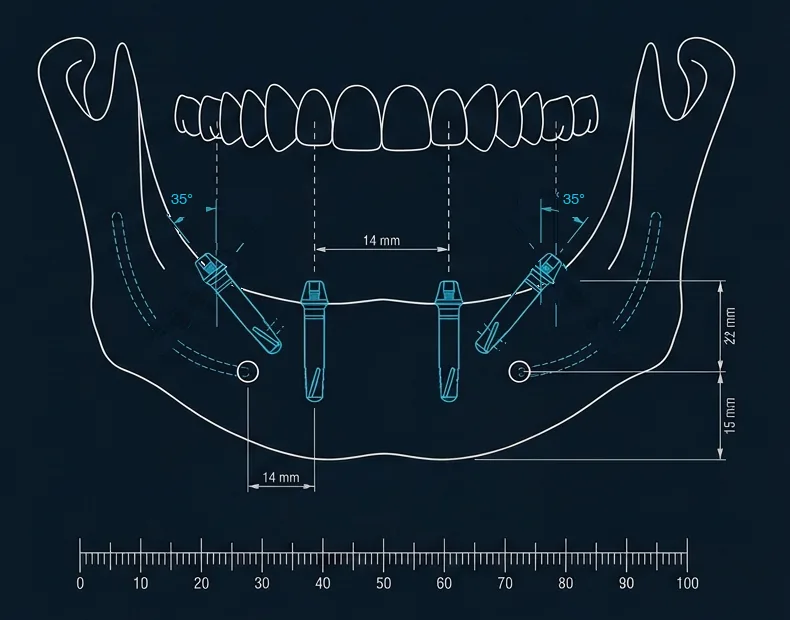
Single tooth or full arch? For one tooth, the gap may be left to heal or covered with a temporary tooth. For a full arch, such as All-on-4 dental implants, temporary fixed teeth can often be attached soon after surgery when the implants are stable enough. Your surgeon decides that during the procedure, not before.
Step 5: Healing while the bone fuses
This is the longest and quietest part of the process. The bone grows onto the implant surface until the implant is firmly locked in place. According to the Cleveland Clinic, this takes anywhere from three to nine months, depending on how quickly your body heals.
During this time you go about your normal life. You may have one or two check-ups to confirm healing. Smoking, uncontrolled diabetes and poor cleaning around the implant can slow or disrupt this stage, so it’s worth asking what you can do to help it along.
Step 6: Abutment and final teeth
Once the implant has fused, the abutment is attached and impressions or a digital scan are taken for your final teeth. The crown, bridge or full-arch prosthesis is made to fit your bite and your face, then fixed in place. This usually takes one or two visits.
Step 7: Living with implants
Implants can’t get cavities, but the gum and bone around them still need care. Brush, clean between and around the implants, and keep regular check-ups. In a large systematic review, about 96% of contemporary implants were still in place after 10 years (Howe et al., 2019). The Cleveland Clinic notes that crowns and bridges on implants commonly last around 15 years, and may eventually need replacing even when the implant itself is fine.
A typical timeline at a glance
| Stage | Typical time | Source |
|---|---|---|
| Evaluation and 3D CT scan | One visit | — |
| Bone graft healing, only if needed | 3 months; 9–12 months for large grafts | Cleveland Clinic |
| First healing after implant surgery | About 1 week | Cleveland Clinic |
| Bone fusing to the implant | 3–9 months | Cleveland Clinic |
| Abutment and final teeth | 1–2 visits | — |
Your timeline depends on your bone, your health and how you heal. Anyone who promises the same timeline to everyone before seeing your scan is guessing.
If you’re traveling for treatment
Many Californians have their implants placed across the border, where the process follows the same stages, often grouped into two main trips: one for the scan, surgery and temporary teeth, and one for the final teeth a few months later. Plan for follow-up and for what happens if you need to be seen between trips. The CDC’s guidance on medical tourism is a good checklist. For the practical side, from the border crossing to where to stay, read about dental implants in Tijuana.
Questions to ask at every stage
- Before the scan: Who will review my scan, and will I get the plan in writing?
- Before surgery: How many implants, which brand, and why that number?
- About bone: Do I need a graft? If so, were graft-free options considered?
- About the timeline: When will I have fixed teeth, temporary and final?
- About anesthesia: Local or sedation? Will I need someone to drive me?
- About follow-up: Who sees me if something feels wrong between visits?
- About the team: Who places the implants, and what is their training? See who places dental implants.
You don’t have to figure this out alone
A good implant process is mostly invisible: the plan was clear, the steps happened when they were supposed to, and one day you bit into an apple without thinking about it. Getting there starts with one honest look at your scan.
Send us your X-rays or CT scan. We'll send back a written, step-by-step plan with timelines and costs. No pressure.
Frequently asked questions
What are the steps of the dental implant process?
Most implant treatment follows six stages: a 3D scan and evaluation, a written plan, preparation such as extractions or a bone graft if needed, placing the implant, three to nine months of healing while the bone fuses to it, and then the abutment and final teeth. After that comes long-term care with regular check-ups.
How long does the whole dental implant process take?
For many people, it takes several months from the first scan to the final teeth, mainly because the bone needs three to nine months to fuse to the implant. If a bone graft is needed first, add at least three months, or nine to twelve for a large graft. Your scan and health set the real timeline.
What does implant surgery feel like?
The implant is placed under local anesthesia or sedation, so you shouldn’t feel pain during the procedure. Afterward, swelling and tenderness for a few days are common and usually managed with over-the-counter or prescribed medication. The first round of healing takes about a week, according to the Cleveland Clinic.
Will I have teeth while the implants heal?
Sometimes. For full-arch treatment, temporary fixed teeth can often be attached soon after surgery if the implants are stable enough. Final teeth come later, after the bone has fused to the implants. For single implants, it depends on the site and the stability achieved during surgery.
Do I need a bone graft before implants?
Not always. A 3D CT scan shows whether you have enough bone. If you don’t, a graft or sinus lift may be needed, or techniques like angled, zygomatic or subperiosteal implants may use the bone you already have. The right choice depends on where the bone is missing and how much.