
Zygomatic Implants: Fixed Teeth, Even When You've Been Told There Isn't Enough Bone
Zygomatic implants are long dental implants anchored in the cheekbone (the zygomatic bone) instead of the upper jawbone. They are designed for people who have lost too much upper bone for regular implants, and in many cases they allow a fixed set of teeth without a bone graft first.
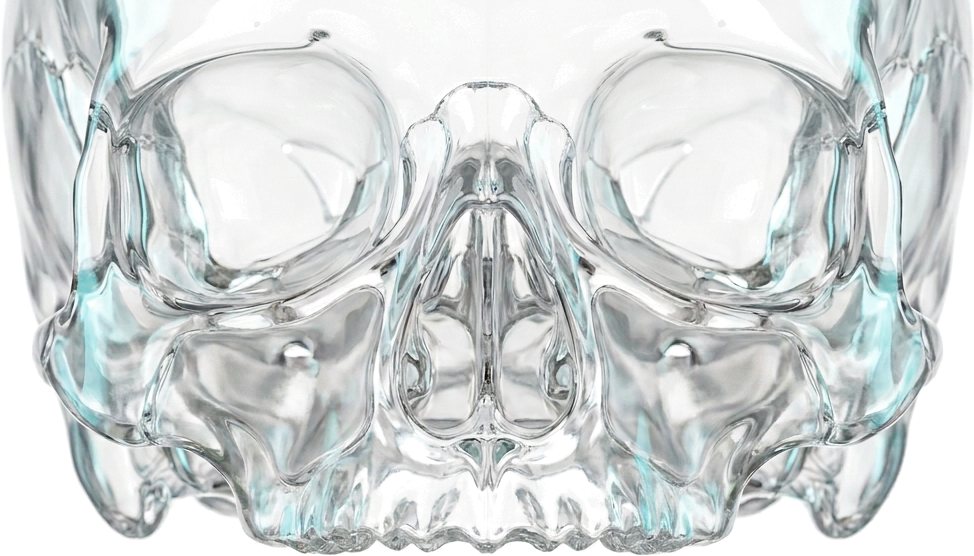
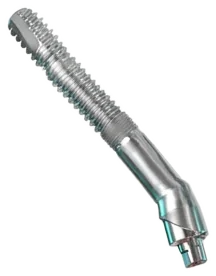
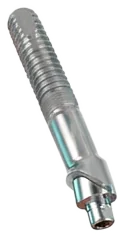
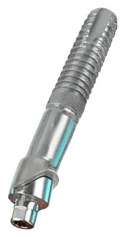
If you’ve heard “you don’t have enough bone” from one or more dentists, you are not alone, and it isn’t always the end of the conversation. This page explains, in plain language, what zygomatic implants are, who they’re for, how the process typically works, the real risks, and what it costs compared with California.
What are zygomatic implants?
A regular dental implant is a small titanium post, usually around 8 to 13 mm long, placed in the jawbone. It needs enough bone height and width around it to stay stable.
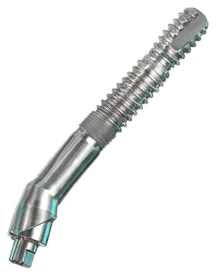
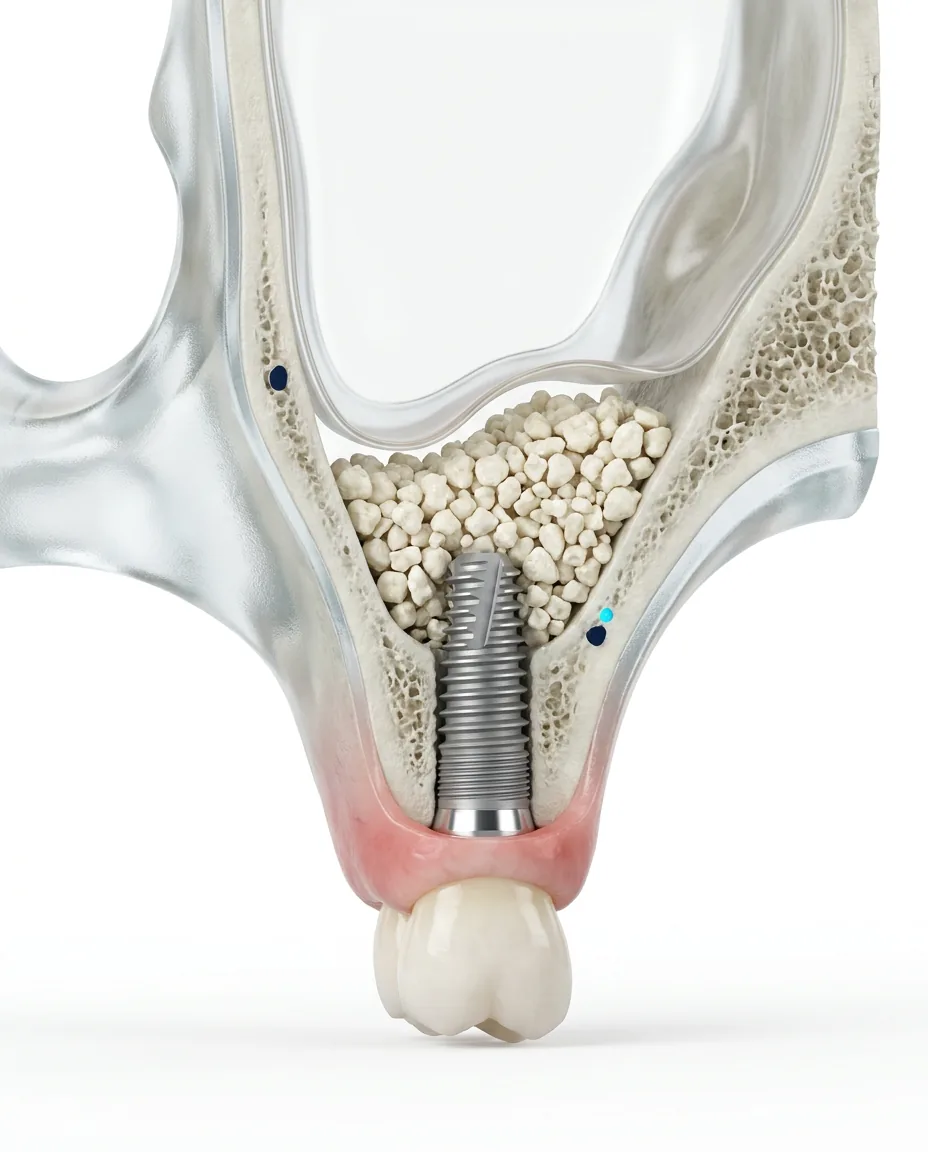
A zygomatic implant is the same idea built for a very different situation. It is much longer — often in the range of 35 to 50 mm — and it is angled so its tip anchors in the dense bone of the cheekbone. The cheekbone does not shrink the way the upper jaw does after teeth are lost, which is why it can offer a stable anchor when the jaw itself can’t.
Zygomatic implants have been used for more than 30 years, and published systematic reviews report long-term survival rates comparable to conventional implants (2023 review (opens in a new tab)). They are still an advanced surgical procedure, and the experience of the surgical team matters a lot (more on that below).
8–13 mm
Typical length of a regular implant, placed in the jawbone.
35–50 mm
Typical length of a zygomatic implant, anchored in the cheekbone.
30+ years
In clinical use, with published long-term data.
Who are zygomatic implants for?
Zygomatic implants are not for everyone, and they are rarely the first option. They make sense when standard implants would need major bone rebuilding first, or aren’t possible at all. People who typically ask us about them:
You have little or no bone left in the upper jaw
After years without teeth, with a denture, or after gum disease, the upper jaw shrinks. The sinuses can also expand downward. The result is that there is simply not enough bone to hold a regular implant. If that sounds like your scan, read more about dental implants with bone loss.
Your upper denture won't stay in
Many people come to us after years of adhesive, sore spots and a denture that moves when they laugh or bite. Upper dentures often lose grip as the bone underneath keeps shrinking. Fixed teeth on zygomatic implants don’t come out at night and don’t rely on adhesive.
You were told “it can’t be done” or “you need a bone graft first”
This is the group we care about most. Some people have been turned away. Others were offered a bone graft or sinus lift with months of healing before implants can even be placed — or had a graft that didn’t take. Zygomatic implants are often designed to avoid that graft entirely. We can’t promise you’re a candidate before we see your scan, but a “no” from one office is worth a second look.
Previous implants failed
Failed implants in the upper jaw often take bone with them. Zygomatic implants can be one of the options for a second attempt. Your evaluation will tell you whether it’s the right one.
How zygomatic implants work
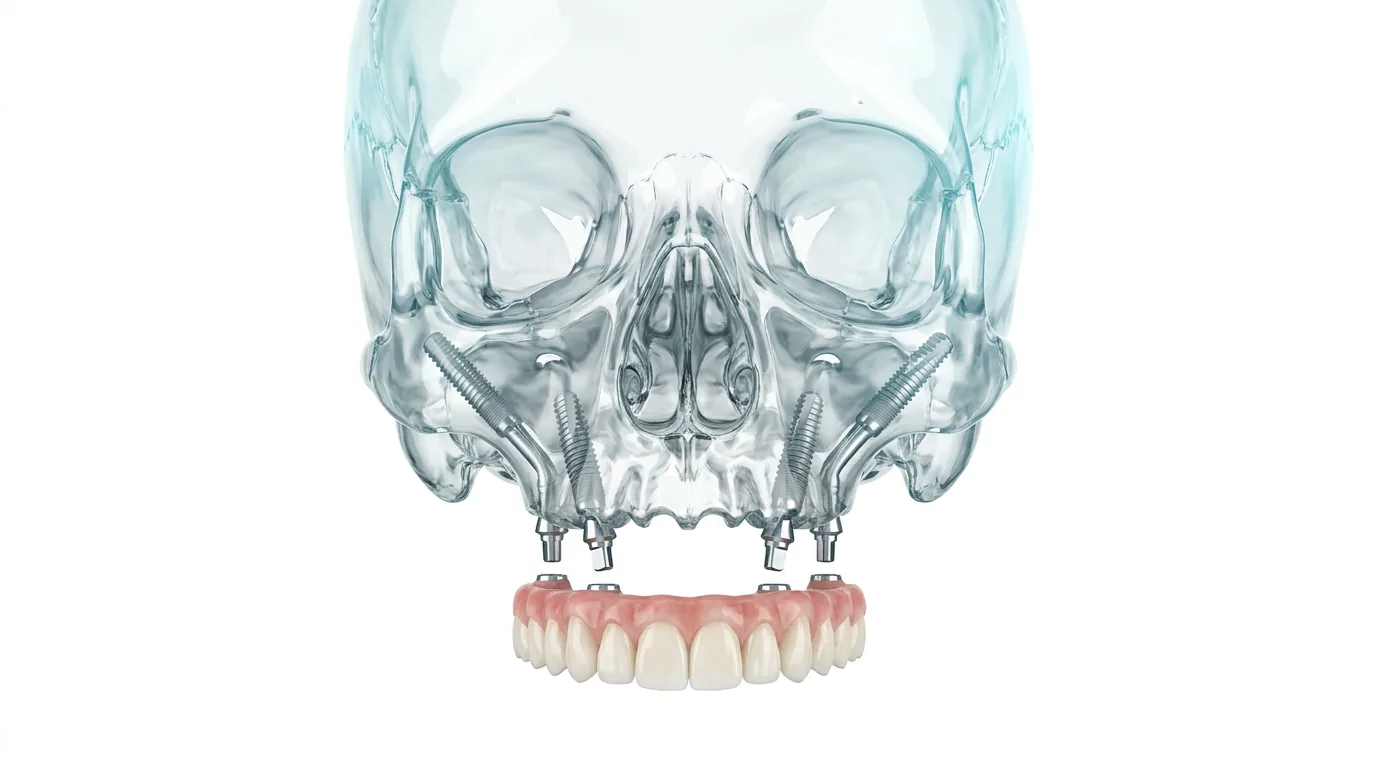
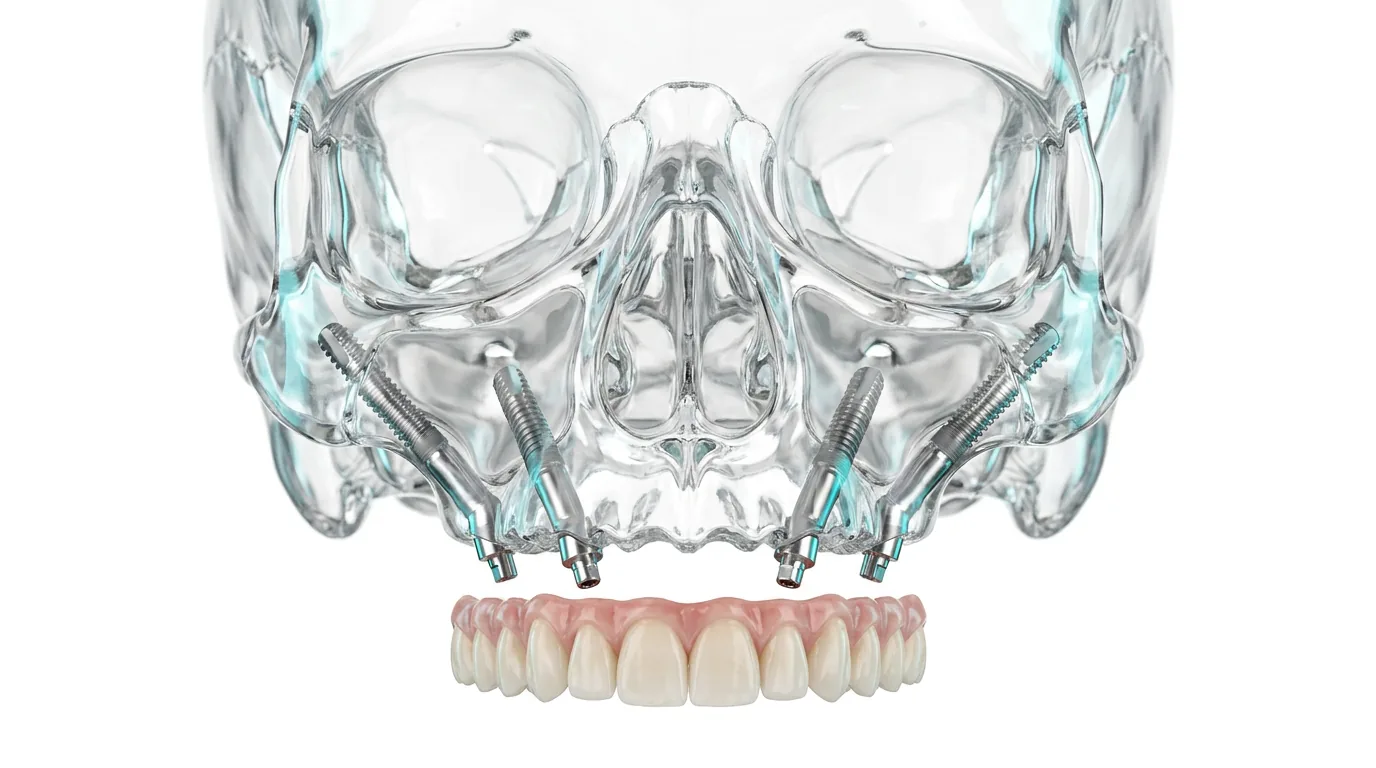
The implant starts in the mouth, near where your back teeth used to be, and travels upward along the side of the sinus until it anchors in the cheekbone. Once the implants are in place, a fixed full-arch bridge is attached to them. There are two common layouts:
01
Quad zygoma (four zygomatic implants)
Two zygomatic implants on each side. This is typically used when there isn’t enough bone anywhere in the upper jaw, including the front.
02
Two zygomatic + two regular implants
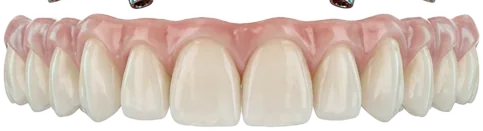
One zygomatic implant on each side for the back, and two or more standard implants in the front, where some bone usually remains. This is a common layout when the back of the jaw has collapsed but the front hasn’t.
Why no bone graft?
A bone graft rebuilds the jaw so a regular implant has something to hold onto. That usually means a separate surgery and several months of healing before implants. Zygomatic implants skip that step by using bone that is already there: the cheekbone. Your surgeon decides which approach is safer for you based on a 3D CT scan, not on a package.
Interactive 3D model for illustration. Anatomy based on Z-Anatomy (CC BY-SA 4.0).
Zygomatic implants vs bone graft vs All-on-4
These three options solve the same problem in different ways. The right one depends on how much bone you have — which is why the CT scan comes before any recommendation.
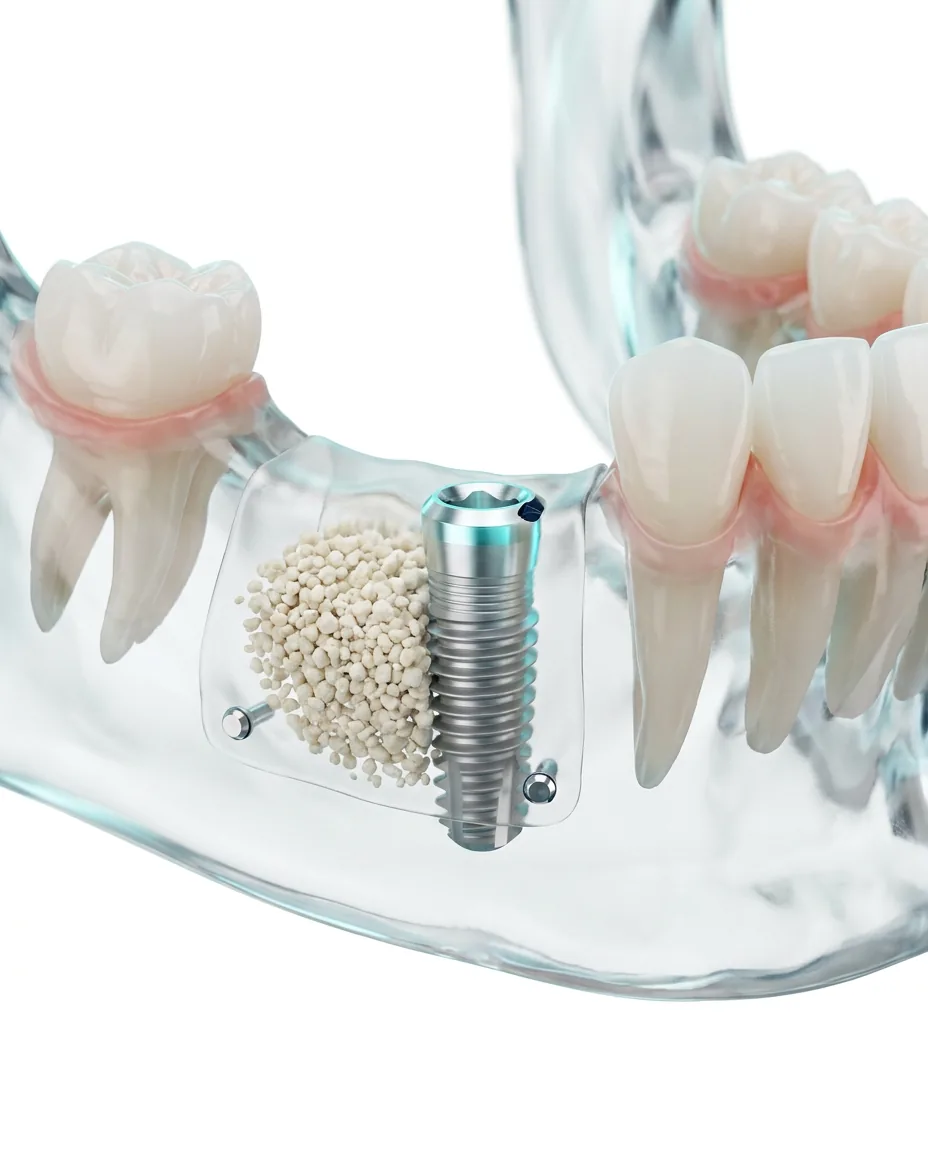
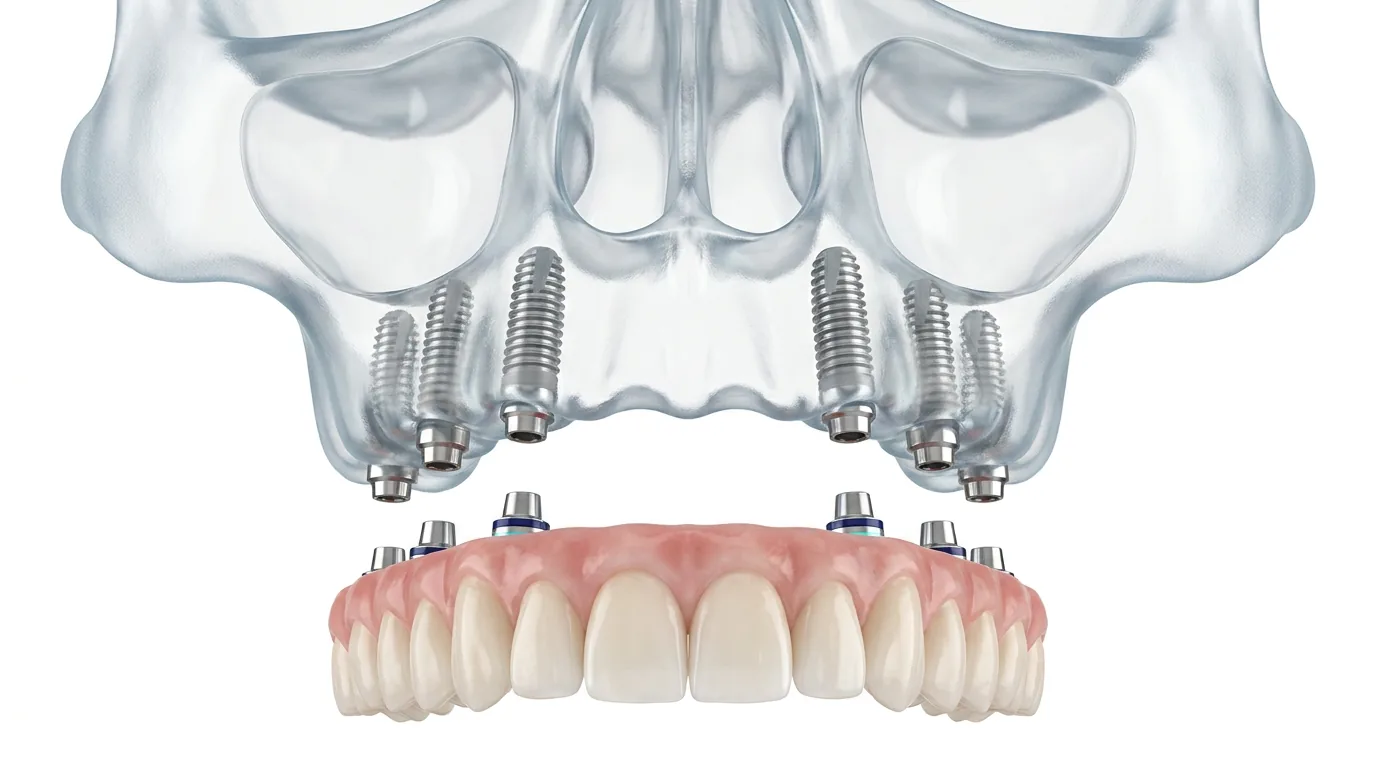
| Zygomatic implants | Bone graft + regular implants | All-on-4 / All-on-6 | |
|---|---|---|---|
| Best for | Severe upper bone loss; failed grafts; people told "not enough bone" | Moderate bone loss where rebuilding is predictable | Enough bone in the jaw for standard (sometimes angled) implants |
| Where implants anchor | Cheekbone (+ front jaw in some layouts) | Rebuilt jawbone | Existing jawbone |
| Bone graft needed? | Usually not | Yes, by definition | Usually not |
| Typical time to fixed teeth | Often a fixed temporary bridge within days of surgery, when stability allows | Typically several months of graft healing before implants, then more healing | Often a fixed temporary bridge within days of surgery, when stability allows |
| Number of surgeries | Typically one | Typically two or more | Typically one |
| Surgical complexity | High — requires specialized training | Moderate | Moderate |
| Main specific risk | Sinus problems; proximity to the eye socket | Graft that doesn't integrate | Insufficient bone discovered during planning |
If your scan shows you have enough bone, All-on-4 or All-on-6 is usually simpler, and we’ll tell you so. For other advanced options when the upper back jaw is missing bone, see pterygoid or subperiosteal implants. For a broader look at replacing a whole arch, see full-mouth dental implants.
The process, step by step
Every case is different. The times below are what’s typical; your plan will have your own dates.
- 01
Free evaluation (online).
You send us any dental X-rays or CT scans you already have, plus a few questions about your health. If you don't have a scan, we'll tell you how to get one.
Typically: a reply within 1–2 business days.
- 02
Consultation and 3D CT scan in Tijuana.
The surgeon reviews your anatomy, explains the options (including whether you even need zygomatic implants) and gives you a written treatment plan and quote.
Typically: half a day.
- 03
Surgery day.
Under anesthesia, the implants are placed.
Typically: a few hours for a full arch.
- 04
Temporary fixed teeth.
When the implants are stable enough, a fixed temporary bridge is attached. You leave with teeth, not with a gap.
Typically: within 1–3 days of surgery.
- 05
Healing at home.
You go back to California. A soft diet is typical for the first weeks.
Typically: 4–6 months of healing.
- 06
Final bridge.
You return for your final, permanent full-arch bridge.
Typically: 1–2 visits.
How many trips? Typically two main trips, plus follow-ups that can often be done by video or with your local dentist.
Risks, and how they're managed
Zygomatic implants are surgery, and any surgery has risks. Here is what’s honest to know:
- Sinus problems. Because the implant runs alongside the sinus, sinusitis is the most commonly reported complication in published reviews (2021 review (opens in a new tab)). Careful 3D planning and follow-up help catch and treat it early.
- Nearby structures. The eye socket and nerves of the face are close to the surgical area. This is why zygomatic implants should only be placed by a surgeon with specific training and experience in them, using a CT scan to plan the exact path.
- Implant failure. Like any implant, a zygomatic implant can fail to integrate. When it happens, there are usually options to replace it.
- Swelling, bruising and discomfort. Expected in the first days to weeks. You'll get written aftercare instructions and a direct line for questions.
- Smoking and uncontrolled diabetes raise the risk of complications with any implant. Be honest with us about both.
The FDA’s patient guide on dental implants (opens in a new tab) and Cleveland Clinic’s overview of dental implant treatment (opens in a new tab) are good, neutral places to read more before your consultation.
Zygomatic implants cost: Tijuana vs California
Zygomatic implants are one of the most specialized treatments in implant dentistry, and in California they are offered by relatively few surgeons. Prices vary widely depending on the number of implants, the type of final bridge and whether imaging and temporary teeth are included.
| Implantology, Tijuana | Typical California quote | |
|---|---|---|
| Quad zygoma, full upper arch, with fixed bridge | from $ — | $ — |
| 2 zygomatic + 2 regular, full upper arch | from $ — | $ — |
| 3D CT scan and consultation | $ — | $ — |
Prices will be published once confirmed by our surgical team.
Every quote is written, itemized and given after your scan, not before. For the full picture of what dental implants cost in Mexico vs California, see our cost guide.
Why Tijuana
- Close. Tijuana is about 20 miles south of downtown San Diego. Many patients drive from Los Angeles, Orange County or the Inland Empire the same day. Check live crossing times at U.S. CBP Border Wait Times (opens in a new tab).
- Specialized care at a different cost. Lower operating costs in Mexico — not lower standards — are what make the price different. Ask any clinic, including us, for licenses, materials and implant brands in writing.
- Safety. It's a fair question. Check the current U.S. State Department travel advisory for Baja California, plan your trip with the clinic, and read the CDC's guidance on medical tourism (opens in a new tab) before any treatment abroad.
- Follow-up at home. We work with California dentists when patients want local follow-up. If you're a dentist, see for dentists.
More about getting dental implants in Tijuana.
What life can look like after
Most people don’t come to us asking about cheekbones or titanium. They come because they want to stop thinking about their teeth. They want to bite into a steak at a family dinner, laugh without covering their mouth, and stop carrying adhesive in their pocket.
That’s the goal of a fixed bridge: teeth that stay in place, that you brush and care for, and that don’t come out at night. Results are different for every person, and your surgeon will tell you honestly what to expect in your case. But for many people who were told “there’s nothing we can do,” it starts with a second look.
Send your scan. Get a written answer. No pressure.


Frequently asked questions
What are zygomatic implants?
Zygomatic implants are extra-long dental implants that anchor in the cheekbone instead of the upper jawbone. They are used when the upper jaw has lost too much bone for regular implants. They support a fixed full-arch bridge and, in many cases, avoid the need for a bone graft or sinus lift before treatment.
Who is a candidate for zygomatic implants?
Candidates are usually adults with severe bone loss in the upper jaw: people with loose upper dentures, failed bone grafts or failed implants, or who were told they don’t have enough bone. Candidacy can only be confirmed with a 3D CT scan and an evaluation by a surgeon trained in zygomatic implants.
Can I get dental implants without a bone graft?
Often, yes. Zygomatic implants anchor in the cheekbone, and options like All-on-4 or pterygoid implants use angled implants to reach existing bone. Whether you can avoid a graft depends on how much bone you have and where. A 3D CT scan shows which approach is safer in your case.
How much do zygomatic implants cost?
Cost depends on the number of zygomatic and regular implants, the type of final bridge, and what’s included, such as the CT scan and temporary teeth. In Tijuana, treatment typically costs less than in California. We give a written, itemized quote after reviewing your scan, never a guess before.
Are zygomatic implants safe?
Zygomatic implants are an established technique, and published systematic reviews report long-term survival comparable to conventional implants. Like any surgery, they carry risks, mainly sinus problems and risks related to nearby structures. Safety depends heavily on the surgeon’s specific training, careful 3D planning, and follow-up after surgery.
Do zygomatic implants hurt?
The surgery is done under anesthesia, so you shouldn’t feel pain during the procedure. Swelling, bruising and discomfort are normal for the first several days and are usually managed with prescribed medication and cold compresses. Your surgeon will explain what recovery typically looks like and give you written aftercare instructions.
How long do zygomatic implants last?
Published long-term studies follow zygomatic implants for many years with high survival rates. How long yours last depends on your general health, not smoking, daily cleaning of the bridge, and regular check-ups. The bridge itself may need repairs or replacement over time, as with any full-arch restoration.
How long does the zygomatic implant process take?
Typically, you get a fixed temporary bridge within a few days of surgery, then heal at home for about four to six months before receiving the final bridge. Most patients make two main trips to Tijuana. Your own timeline depends on your anatomy and how healing goes.
What's the difference between All-on-4 and zygomatic implants?
All-on-4 uses four regular implants placed in the existing jawbone, sometimes angled. Zygomatic implants anchor in the cheekbone when the jawbone can’t support regular implants. If you have enough bone, All-on-4 is usually simpler. Zygomatic implants are for cases where All-on-4 isn’t possible without grafting.
Can I get zygomatic implants in Mexico if I live in California?
Yes. Tijuana is about 20 miles from downtown San Diego, so many California patients travel for the consultation and surgery and recover at home. Most of the planning happens before you travel. Ask any clinic for written details on the surgeon’s training, materials used, and follow-up care.
A “no” from one office is worth a second look.
Send your scan from home. A surgeon reviews your case and answers in writing.
This page is for general information and does not replace a professional evaluation. Every treatment plan depends on an individual clinical examination and imaging. Results vary from person to person.
